







What is Quinic Acid? The Chemistry Behind Coffee Acidity, Roasting, and Temperature Changes

Hello everyone!
And thank you for visiting my site! ^ ^
Have you ever wondered, “What kind of components are actually in my coffee?”
Coffee possesses complex flavors like bitterness, acidity, body, and aroma, and the components contained within it are just as diverse.
In this article, I will introduce you to one of those key components found in coffee: “Quinic Acid”!
What is Quinic Acid? Understanding the “Backbone” of Coffee Acidity

Quinic acid is one of the key components that create the complex acidity found in coffee.
When we talk about acidity in coffee, we often think of the fruity notes typically provided by citric acid or malic acid. However, quinic acid plays a different role. It is responsible for the distinct sharpness, bitterness, and rich body that gives coffee its “kick.”
Originally discovered in the South American Cinchona tree, quinic acid is also found in other foods like cranberries and grapefruits.
In terms of quantity, it is the second most abundant acid in green coffee beans, right after the well-known chlorogenic acid. Because of its significant presence, quinic acid can truly be described as the component that forms the backbone of coffee’s flavor profile.
How Roasting Affects Quinic Acid and Acidity
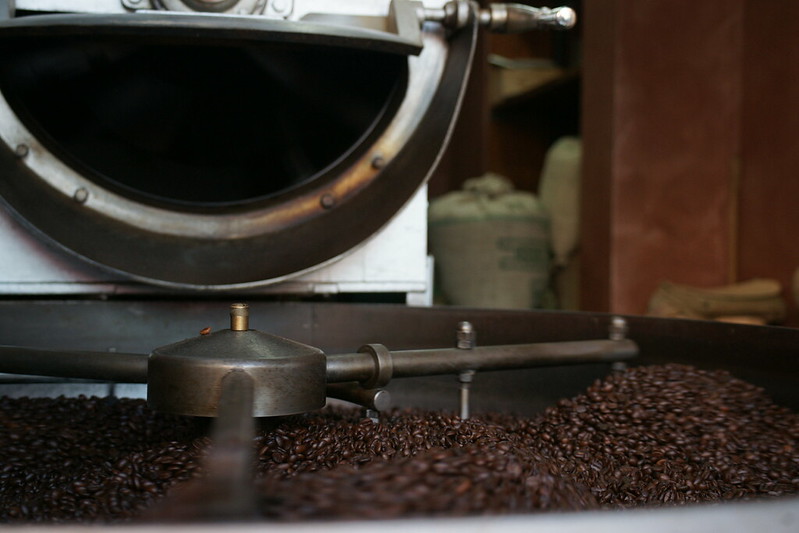
When coffee beans are roasted, dramatic chemical changes occur inside the bean. Among these changes, quinic acid shows an interesting behavior: it “increases at first, then decreases” during roasting.
Light to Medium Roast: The Phase Where Quinic Acid Increases
While green beans contain quinic acid naturally, in the early stages of roasting, another major component called “chlorogenic acid” decomposes due to heat, generating new quinic acid.
Because the amount being “generated” exceeds the amount being “destroyed by heat,” quinic acid levels peak around a Medium Roast. This is why medium roast coffee often possesses such rich acidity.
Dark Roast: The Phase Where Quinic Acid Decreases and Flavor Changes
As roasting continues deeper (Dark Roast), the speed of thermal decomposition accelerates, causing overall acidity levels, including quinic acid, to drop.
This is one of the reasons why light to medium roast coffees tend to be more acidic than dark roast coffees.
Interestingly, quinic acid tends to survive longer than other fruity acids (like citric acid). Therefore, at the beginning of a dark roast, rather than fruitiness, the “distinct rich acidity of quinic acid” starts to emerge.
Why Coffee Tastes Sour When Cold: The Relationship Between Temperature and Quinic Acid

Have you ever noticed that freshly brewed coffee is well-balanced, but suddenly tastes sour when it cools down?
This is deeply related to the unique properties of quinic acid and a chemical reaction called hydrolysis.
Structural Change from Bitterness to Acidity
Due to the heat during roasting and brewing, some quinic acid dehydrates and transforms into a substance called “quinide” (quinic acid lactone).
Actually, this “quinide” is one of the components that contribute to coffee’s bitterness.
However, as the temperature drops and time passes, quinide reacts with water (hydrolysis) and reverts to its original form: “quinic acid” (an acidic component).
In other words, a seesaw-like phenomenon where “bitterness decreases and acidity revives” occurs in your cup as it cools.
Changes in How Our Tongue Perceives Taste
Furthermore, human taste buds have a characteristic where they perceive bitterness strongly when hot, and acidity strongly when cold.
The combination of these two factors—”chemical changes in components” and “temperature characteristics of taste”—makes cold coffee taste intensely acidic.
By the way, with truly high-quality beans (like specialty coffee), this change highlights a fruit-like sweet acidity, making it incredibly delicious even when cold.
It is no exaggeration to say that “the true potential of the bean is tested when it cools down.”
Health Benefits of Quinic Acid

The benefits of drinking coffee aren’t limited to the awakening effect of caffeine.
Quinic acid is also expected to have beneficial effects on the body.
Mechanism for Protecting Urinary Tract Health
The most famous benefit is the prevention of urinary tract infections (such as cystitis).
When metabolized in the body, quinic acid converts into an acidic substance called “hippuric acid” and is excreted in urine. This keeps the urine acidic, which is believed to prevent the growth of bacteria that prefer alkaline environments.
There are also research reports suggesting that acidic urine helps prevent certain types of urinary stones.
How to Intake Efficiently?
You might think, “So, I should drink lots of coffee to prevent it!” but that is not highly recommended.
Trying to get enough quinic acid for prevention solely from coffee would lead to excessive caffeine intake.
If you are serious about urinary tract care, cranberry juice (especially those with high fruit juice concentration), which contains overwhelmingly more quinic acid, is more efficient.
It might be best to treat the quinic acid in coffee as a nice bonus effect: “I was just enjoying delicious coffee, and it happened to be good for my body too!” ^ ^
Summary

In this article, we discussed “Quinic Acid,” a key component that supports the backbone of coffee acidity. How did you find it?
Let’s look back at the key points of the article.
- Quinic acid is responsible for “sharp, astringent acidity”: A mature acidity different from fruity acids.
- Peaks at Medium Roast: Due to generation and decomposition during roasting, amounts are highest around a medium roast.
- Revives when cold: Components changed by heat revert to their original form, making cold coffee taste sour.
Quinic acid might seem inconspicuous on its own. However, by intertwining complexly with chlorogenic acid, caffeine, and other aroma components, it creates the “coffee flavor” we love.
“So, cold coffee is sour because the components are trying to go back to normal.” Next time you have coffee, why not think about such chemical reactions and enjoy the transition of taste due to temperature changes?
We plan to continue analyzing components that make up coffee, such as “chlorogenic acid” and “caffeine,” from a maniacal perspective on this blog. Let’s enjoy the fun of coffee from a chemical point of view! ^ ^

 ポチップ
ポチップ ポチップ
ポチップRecommended

No comments yet.